Turn every signalinto a shipped improvement.
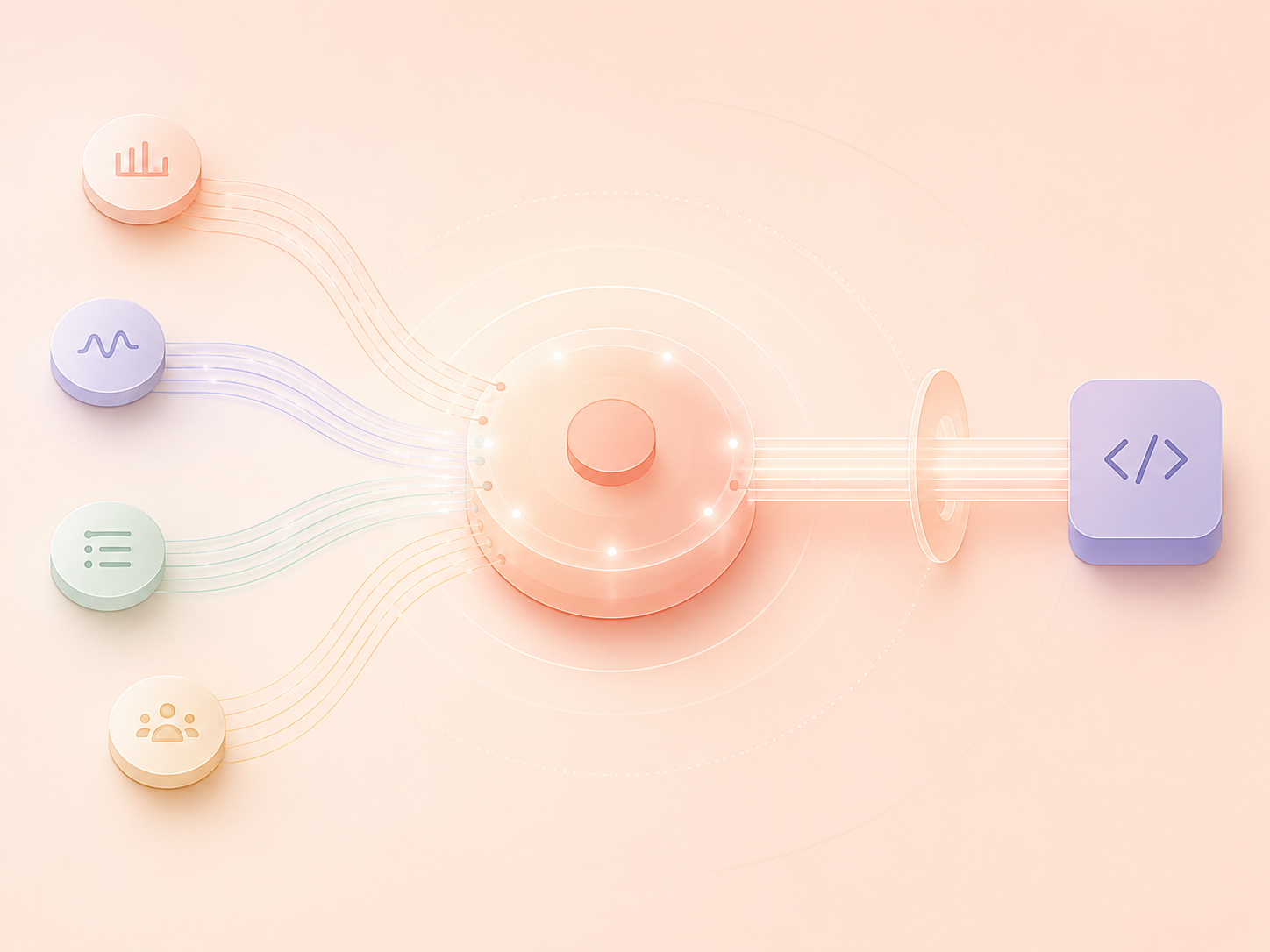
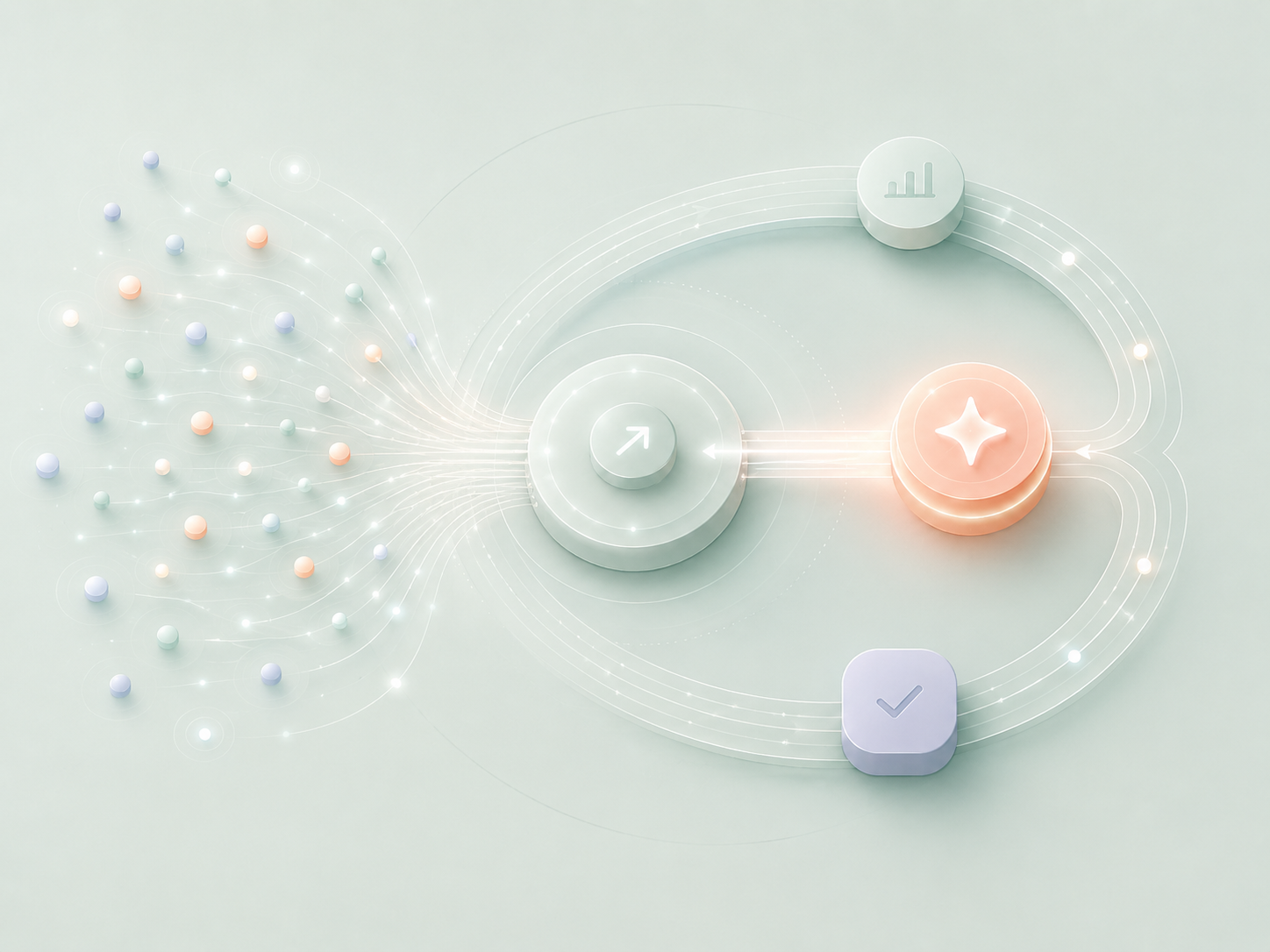
Cleo is your AI product engineer. It continuously turns customer signal, product usage, and agent traces into shipped improvement bets, ships them through Cursor, Claude Code, Devin, or Cline, then proves what actually moved. End to end, on repeat.
Quarterly roadmaps are dead. The spec your team ships next is already running in production.
Planning cycles assumed humans wrote the code and customers told you what to build. Both assumptions broke. Coding agents write the code now, and your production already shows you what to build next. The bottleneck moved. It is no longer throughput or even prioritization. It is feeding agents the right context, sourced from production, at the moment a decision has to be made. The team that wins stops deciding what to build and starts running agents against production truth.
Signal is weighted by blast radius, not volume.
A noisy alert on a path no one hits ranks below a quiet opening in the revenue funnel. Cleo scores every signal, usage cohorts, agent traces, and customer asks, by users affected times dollars in play, so the bet at the top is the one that moves the number.
Every bet carries the trace that triggered it.
No bet exists without the production evidence attached: the usage cohort, the agent trace, the customer ask that corroborates it. The argument happens against the data, not against whoever has the most conviction in the room. Decisions become reviewable, not political.
Agents get context bundles, not tickets.
A one-line ticket loses the context by the time an agent reads it. Cleo packages the usage cohorts, the spec, the test cases, and the win-condition gate into one bundle and hands it to Cursor, Claude Code, Devin, or Cline. Your team approves; the agent ships; the loop closes against the same metric that opened it.
Production to handoff, on one closed loop.
Cleo isn’t a dashboard. It reads what production is telling you, picks the improvement worth shipping, and hands a grounded context bundle to whichever coding agent your team runs.
- Listen
Every signal, ranked by upside.
Usage from Mixpanel and Amplitude, traces from LangSmith, customer asks from Intercom, revenue from Stripe. Cleo groups by behavior, not by tool.
- Bet
The bets that move the needle.
Signals rank into bets, weighted by impact and confidence. Each bet carries a hypothesis and a sourced win condition tied to the metric.
- Handoff
Grounded context for your coding agents.
Cleo packages the usage cohorts, the spec, the tests, the win-condition gate. Then hands off to Cursor, Claude Code, Devin, Cline.
- Prove
The agent ships. The metric moves.
Cleo watches the same metric that justified the bet. If it moved, the loop closes and the learning compounds. If not, it says so and re-opens.
- Mixpanelplanner users retain 2.3× better2.3×
- Mixpanelonly 19% reach the planner19%
- LangSmithplanner runs rated highest flow0.91
- Stripeplanner users expand 1.8× faster1.8×
Four moments where Cleo earns its seat at the table.
Each moment is the same operator at a different point in the loop. Listen to every signal, place the bet, hand off the context, prove the impact. Not four products. One.
Mixpanel shows planner users retain 2.3× better and expand 1.8× faster, yet only 19% of new workspaces ever reach it. LangSmith rates planner runs the highest flow at 0.91 satisfaction. Win condition: planner reach 19% → 40%+.
Plugs into the stack you already run.
Cleo reads from your observability and product tools, then writes to your coding agents and trackers. No rip and replace.
- Sentry
- Datadog
- LangSmith
- Helicone
- OpenTelemetry
- Linear
- GitHub
- Jira
- Notion
- Mixpanel
- PostHog
- Amplitude
- Stripe
- Cursor
- Claude Code
- Devin
- Cline
- Aider
Or bring your own. Cleo speaks REST and MCP, so any source or sink your team runs can join the loop.
From product guesswork to a proven loop.
Same team. Same prod. Same coding agent. Two completely different cycles.
A normal Tuesday
Six tabs open: Mixpanel, Amplitude, LangSmith, Intercom, Linear, Cursor. The signal that the planner drives retention is sitting right there. Nobody has stitched it into a bet yet.
The bet lands already grounded
By 09:14 the bet is packaged. Usage cohorts, traces, spec, win condition. Cursor has the full context bundle before the engineer touches the keyboard.
Less context-juggling. More closed loops.
Cleo is in private beta with a handful of AI-native B2B teams. The engineer runs continuously. The numbers below are how it runs in those workspaces today.
Built for the systems you guard most.
Cleo is built for AI-native B2B teams whose production system is the most sensitive surface they own. Every control below treats it that way.
Your traces never train shared models.
Cleo learns from your production signal to run your loop, and that is where it stays. Your traces, telemetry, and code context never train a shared or foundation model. Not ours, not a vendor's.
SOC 2 Type II in progress.
We are mid-audit on SOC 2 Type II and will share the report under NDA when it lands. SSO and SCIM are on the near-term roadmap. We will tell you exactly where each control stands, no certs we don't hold.
Every bet, sourced to prod.
Click any bet, see the exact production signal that triggered it. Usage cohort, trace, metric, the ship that moved it. The audit trail runs end to end, so every decision is reconstructable months later.
Self-host or bring your own keys.
Run Cleo in your own cloud or bring your own model keys. You keep data residency control and decide which providers ever see a token. Cleo runs inside your perimeter, not around it.
Dispatches from the production loop.

What is an AI product engineer, really?
Not an observability tool. Not a chatbot. Not an AI PM. The new role on AI-native teams: watch production, ship the fix through coding agents, and prove the impact.

From agent trace to coding-agent handoff.
The full loop, step by step. With templates for the production signal feed, the bet brief, and the Cursor context bundle.

Bet-driven product development is the AI-native default.
Capture every signal continuously, decide on a weekly rhythm. The hybrid cadence for teams shipping with coding agents.